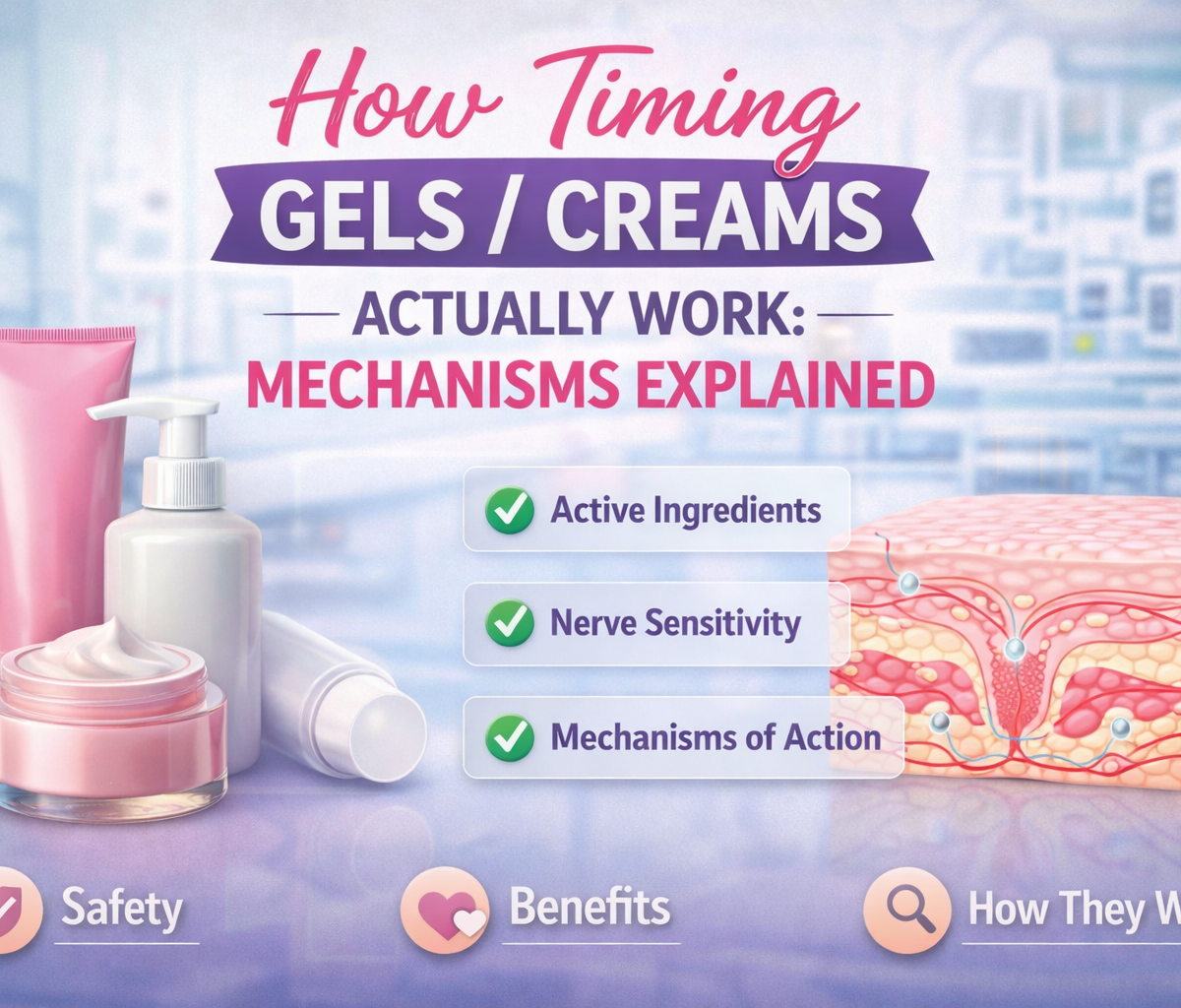
The working of timing creams involves understanding what happens after their application. These products reduce sensitivity temporarily through various mechanisms. Most people use these products without knowing how they function. Understanding the mechanism of delay gels helps us use them more effectively. The products work locally where applied rather than affecting your body.
Numbing Agent Mechanism
These creams work by affecting the skin’s nerve signals. They block sodium channels in nerve cells. It stops their ability to transmit signals. When nerves cannot send signals, your brain doesn’t receive sensation messages. The effect is temporary and reversible as the medication is absorbed away. How numbing creams reduce sensitivity happens through this nerve-blocking action.
Absorption Process
The time it takes for products absorb into the skin determines when they start working. It must penetrate through several skin layers to reach nerves. Thicker skin absorbs products more slowly than thinner skin. Warm skin absorbs ingredients faster than cold skin. Most timing creams need 10 to 30 minutes to absorb adequately. The absorption process continues even after initial effects appear.
Duration of Effects
Their duration varies based on product formulation and individual factors. Your body metabolizes and removes the numbing agents through blood circulation. Skin thickness affects how long numbing persists in different individuals. Some individuals metabolize medications faster than others naturally. The duration of the delay cream effects also depends on how much you apply. Using more product extends duration but increases side effects.
Concentration Matters
The effect of timing cream concentration impacts how well products work. Lidocaine creams typically contain 5 to 10 percent active ingredient. Higher concentrations create stronger numbing but also more side effects. Pharmaceutical products have tested concentrations. Some products use lower concentrations. Understanding concentration helps explain why different products work differently. Optimal timing gel concentration depends on individual sensitivity levels. You can always try stronger products if milder ones prove insufficient.
Individual Variation Factors
Why timing products work differently for everyone relates to biological variation. Psychological factors influence how much numbing you perceive. Age affects skin properties and how medications work generally. Individual response to timing creams means some trial and error is normal. What works perfectly for someone else might not suit you identically. Understanding this variation prevents frustration during the adjustment period.
When Products Don’t Work?
Sometimes, timing gels don’t work due to application mistakes. Not waiting long enough before contact prevents adequate absorption. Using insufficient amounts provides inadequate numbing for some users. Applying to the wrong areas misses the most sensitive zones. Psychological factors sometimes override physical numbing effects. Some individuals don’t respond well to specific product ingredients. Underlying health conditions might require medical treatment beyond topical products.
Conclusion
How timing gels and creams work involves blocking nerve signals that transmit sensation. Pharmaceutical numbing agents like lidocaine temporarily prevent nerve communication. The products must absorb through the skin layers to reach nerve endings. Natural ingredients provide milder effects through different potent mechanisms. Proper application technique impacts how well products work. Understanding these mechanisms helps us use timing products more effectively and safely.